
Murali Sreeshankar Creates History with Second Consecutive Commonwealth Games Long Jump Medal
- Sports
- (Asia/Kolkata)
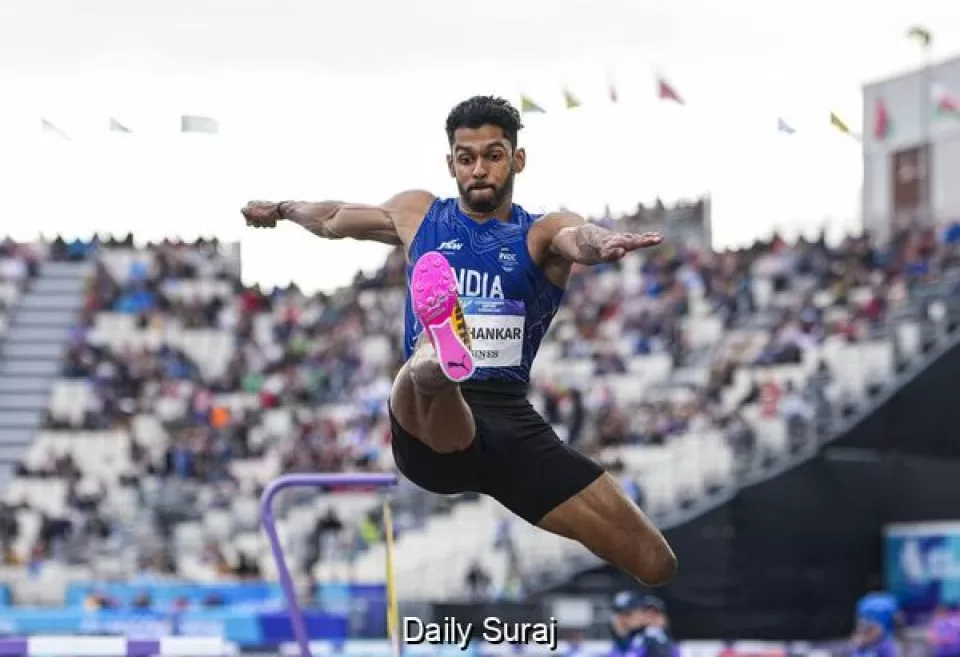
Indian long jumper Murali Sreeshankar etched his name into the country's athletics history on Wednesday by winning the silver medal in the men's long jump at the Commonwealth Games 2026. With this achievement, he became the first Indian athlete to win two Commonwealth Games medals in the long jump event. After claiming silver at the Birmingham 2022 Commonwealth Games, the 27-year-old added another medal to his collection with a best leap of 8.09 metres. The performance also marked an emotional milestone in his career, coming after a serious knee injury that had threatened to derail his future in the sport. Before Sreeshankar's historic feat, India's only Commonwealth Games medallists in the long jump were Suresh Babu, who won the men's bronze in 1978, Anju Bobby George, who secured the women's bronze in 2002, and M. Prajusha, who claimed the women's silver in 2010. Expressing his joy after the event, Sreeshankar said he was grateful to be back on the global stage representing India once again. He admitted that two years ago he had not imagined he would be competing in Glasgow after his injury setback, making the silver medal even more special. Despite his success, Sreeshankar said he was not completely satisfied with his performance, as his goal had been to convert the silver medal he won in Birmingham into gold. He added that he would continue working on improving his technique and overall performance while hoping to carry this momentum into the upcoming Asian Games. Jamaica's former world champion Tajay Gayle won the gold medal with a best jump of 8.15 metres, while home favourite Stephen McKenzie finished third with an effort of 8.08 metres to secure the bronze medal. The silver medal holds added significance considering Sreeshankar's journey over the past year. In April 2024, he underwent surgery after suffering a patellar tendon rupture, an injury that forced him to miss what would have been his maiden Olympic appearance in Paris and raised doubts about whether he could return to his explosive best. His performance in Glasgow, however, underlined a remarkable comeback and reaffirmed his place among the world's leading long jumpers.




Leave a Reply