
Supreme Court Raises Concern Over Viral Videos of Accused, Warns of Impact on Fair Trials
- National
- (Asia/Kolkata)
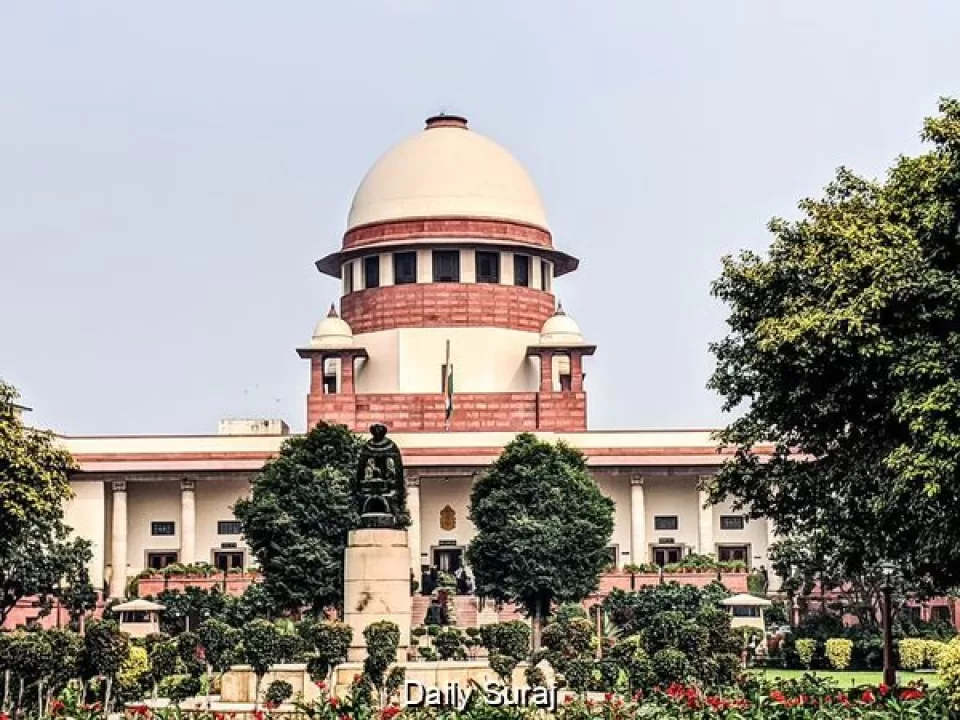
The Supreme Court of India has expressed serious concern over the growing trend of uploading videos recorded on mobile phones to social media, stating that such actions pose a significant threat to the right to a fair trial. The observation was made on Friday by a bench comprising Chief Justice Surya Kant, Justice Joymalya Bagchi, and Justice Vipul M. Pancholi during the hearing of a public interest litigation (PIL). The petition alleged that police authorities often upload videos and images of accused persons on social media, which may create prejudice in the minds of the public. During the proceedings, the bench noted that the increasing tendency of instantly sharing such videos could undermine the fairness of judicial proceedings. The petitioner argued that the court had earlier directed states to frame guidelines for police media briefings, which should also cover social media posts. The court suggested that the petitioner, Hemendra Patel, wait for the outcome of those guidelines. It also agreed with submissions made by senior advocate Gopal Sankaranarayanan, who stated that in the present era, almost every individual with a mobile phone acts as a media entity. The senior counsel highlighted a recent trend where police personnel allegedly post visuals of accused individuals in handcuffs, tied with ropes, paraded in public, or forced into humiliating positions. He argued that such actions not only violate personal dignity but also contribute to public bias. Justice Bagchi observed that instead of focusing solely on police conduct—who have already been given three months to frame standard operating procedures (SOPs)—there is a need to seek a broader framework that includes police, traditional media, and social media platforms. He emphasized that police briefings must not create prejudice against the accused, as investigative agencies are expected to remain neutral in the criminal justice system. The bench also raised concerns about the role of media and the public, particularly on social media platforms, questioning how such activities could be regulated. It noted that, comparatively, television channels tend to exercise more restraint. Referring to past legal developments, the senior advocate pointed out that the issue of “media trials” was first addressed by the Supreme Court in the 2012 Sahara vs SEBI judgment. Justice Bagchi further cautioned that emotional conduct during police briefings could increase the risk of media trials in ongoing cases. Solicitor General Tushar Mehta remarked that certain social media platforms operate in a manner akin to “blackmailers.” The Chief Justice also observed that the situation resembles a new form of “digital arrest,” adding that some individuals misuse media identification stickers for personal advantage. Given the complexity of the issue, the court suggested that the petitioner withdraw the current plea and file a fresh petition after April with a more comprehensive approach. The petitioner’s counsel agreed to withdraw the matter.



Leave a Reply