
Typhoon Bavi Leaves 18 Dead in the Philippines, 12 Still Missing
- International
- (Asia/Kolkata)
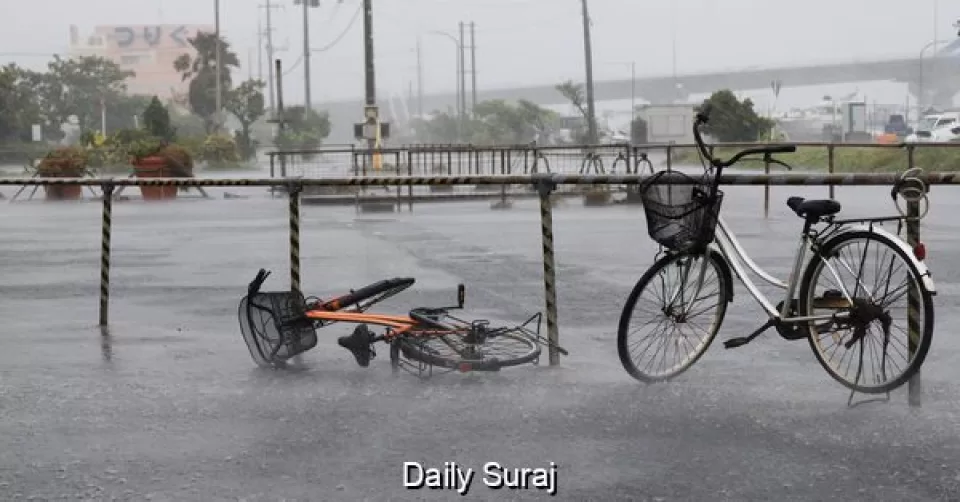
The death toll from the combined impact of Typhoon Bavi and the intensified southwest monsoon in the Philippines has risen to 18, while 12 people remain missing, according to the country's Office of Civil Defense (OCD). The OCD said on Sunday (local time) that most of the fatalities were caused by landslides and drowning, while the severe weather has affected approximately 562,000 people across the country. According to local media reports, the Philippine Atmospheric, Geophysical and Astronomical Services Administration (PAGASA) said Typhoon Bavi has strengthened the southwest monsoon, bringing heavy rainfall to several regions. The agency warned that the continuing rains could increase the risk of flooding and landslides in affected areas. Authorities have deployed search and rescue teams to the worst-hit regions, while disaster response operations remain underway. The Philippine Coast Guard also reported that hundreds of passengers have been stranded at seaports due to rough sea conditions, according to a news agency report. Meanwhile, Typhoon Bavi has also continued to affect China, prompting authorities to intensify flood control and disaster relief efforts. The storm continued to impact large parts of the country on Sunday. The year's ninth typhoon made landfall twice along the coast of Zhejiang Province in eastern China at 11:20 p.m. on Saturday, before moving inland around midnight. Weather officials expect the system to gradually weaken as it moves northwestward. During the past 24 hours, central and southern Zhejiang recorded more than 50 millimetres of rainfall, affecting nearly 42 percent of the province's total area. According to Hu Yaowen, Chief Engineer of Zhejiang's Provincial Emergency Management Department, Typhoon Bavi is the strongest July typhoon to strike Zhejiang since 1949. He said the storm's enormous size and intensity generated massive coastal waves while also pushing deep into inland areas, significantly increasing the risk of flash floods, geological disasters, and urban flooding.






Leave a Reply