
Sobha Singh: Remembering the Legendary Artist on His 125th Birth Anniversary
- National
- (Asia/Kolkata)
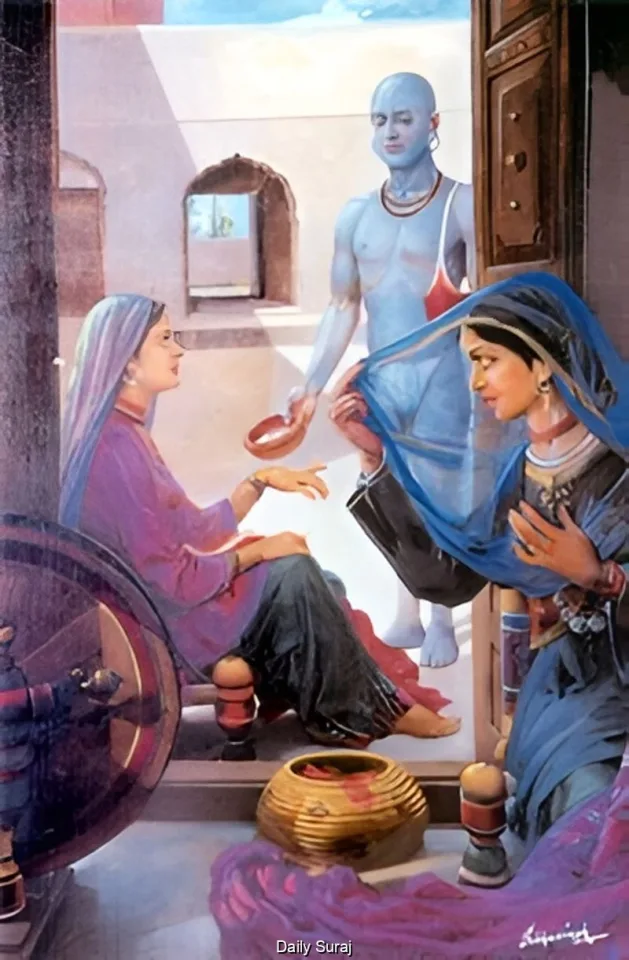
Renowned Punjabi artist Sobha Singh continues to hold a special place in the hearts of art lovers, particularly among Punjabi communities across the world. His paintings, especially his portraits of Sikh Gurus, have become familiar features in countless Punjabi households. November 29, 2026, marks his 125th birth anniversary, offering an opportunity to revisit his remarkable contribution to Indian art.
The popularity of Sobha Singh's work reflects the lasting connection he established with ordinary people. Whether in India or abroad, one can often find reproductions of his paintings displayed in Punjabi homes. His artistic journey demonstrates how creative work can transcend geographical boundaries and remain relevant across generations.
The celebration of his birth anniversary is also a reminder that his contribution to art has not faded from public memory. Such enduring recognition is an achievement reserved for only a few artists.
Early Struggles and the Journey Towards Art
Like many artists, Sobha Singh faced discouragement during his childhood, when his interest in drawing and painting was not always encouraged by his family. However, his determination proved stronger than these restrictions. Over time, he established himself as an influential artist whose name became deeply connected with Punjabi cultural life.
Before finding a permanent home, he moved from one place to another. He eventually decided to settle in Lahore, but the Partition of India changed his circumstances. The division of the country forced millions of people to leave their homes, and Sobha Singh was also compelled to migrate, arriving with very little.
His writings provide valuable insight into his artistic thinking and changing interests. Initially, he was drawn towards the romantic characters of Punjabi folk literature. As his knowledge and rational understanding developed, his artistic attention increasingly shifted towards Sikh Gurus and religious themes.
Early Paintings Inspired by Punjabi Folk Romance
One of Sobha Singh's earliest paintings based on a romantic theme was Sohni-Mahiwal, created in 1929. The composition and surrounding atmosphere of this painting were particularly striking.
The artwork depicts Sohni crossing the Chenab river to meet Mahiwal, who helps her emerge from the water. Although the surroundings appear turbulent, the two central figures are portrayed as calm and composed. Despite their physical closeness, they seem emotionally detached from the intensity of the situation.
In the original painting, Sohni's upper body is uncovered, while both figures have their heads slightly raised. Several reproductions of the original were produced later, with minor differences between them. Sobha Singh once recalled that he remembered even the individual brushstrokes of the painting and knew exactly when it was completed.
His painting of Heer-Ranjha explored a different emotional dimension, presenting themes of union, separation and reunion. The three figures in the composition appear connected yet separated in their own ways. The atmosphere created by the artist reflects ideas of worldly existence and renunciation, while suggesting a deeper meaning beyond what is immediately visible.
He also created paintings based on other Punjabi folk romances, including Mirza-Sahiban and Sassi. However, the intensity and emotional approach visible in his earlier works on Sohni-Mahiwal and Heer-Ranjha were less prominent in these later compositions. Differences in subject arrangement and colour schemes further reflected this change.
From Literary Illustrations to Paintings of Sikh Gurus
Available records suggest that Sobha Singh also designed covers for contemporary literary magazines. These included both monochromatic and coloured illustrations. Publications such as Mehram, Fateh, Preetlari and Phulwari featured his paintings of Sikh Gurus and Sikh warriors.
One of his early portraits depicted Guru Nanak Dev Ji, accompanied by the handwritten line, "Naam Khumaari Nanka Chadi Rahe Din Raat."
From this early work to his famous painting Asees, Sobha Singh created several representations of Guru Nanak Dev Ji. His portraits generally featured a neatly tied turban and a fair, prominent face. Some were painted from the front, while others presented the Guru in profile.
Two of his paintings depicting important episodes from Guru Nanak Dev Ji's life deserve particular attention.
The first portrays the infant Guru Nanak in the lap of Mata Tripta. His sister Bebe Nanaki, a nurse and other women of the household are shown standing nearby, while divine figures shower flowers from above. The composition follows the Janamsakhi tradition and also offers an impression of the household's economic circumstances during the time of Mehta Kalu.
The second painting depicts Guru Nanak Dev Ji preparing to leave home for his Udasis, accompanied by Bhai Mardana Ji and Bhai Bala Ji. As they approach the village boundary, the wives of Guru Nanak Dev Ji and Bhai Mardana Ji meet them with their children.
Set beneath an open sky, the scene carries a deeply emotional message. The women appear to be making one final effort, bringing their children forward in the hope that the Guru might reconsider his decision to leave.
Sobha Singh also produced compositions inspired by traditional wall paintings, depicting Guru Nanak Dev Ji with Bhai Mardana Ji on his right and Bhai Bala Ji on his left. These works indicate how his artistic approach continued to evolve from detailed narrative scenes towards more focused representations of the Guru.
Paintings Depicting Sikh History and Spirituality
His artistic journey also included important events associated with the establishment of the Khalsa Panth. Across these works, one can observe a gradual movement from depicting complete scenes towards focusing on the central personality of a Guru.
One notable painting portrays the sixth Sikh Guru, Guru Hargobind Sahib, in royal splendour. In the royal court, Nur Jahan, wife of Mughal emperor Jahangir, is shown paying her respects to the Guru. The painting is believed to be based on a historical episode. The original large-scale artwork is reportedly housed in the Faridkot Palace.
Another narrative painting relates to Guru Harkrishan Sahib. It depicts the young Guru seated on his throne, with the big toe of his right foot touching the water in a tank. People suffering from various illnesses are shown receiving Amrit and Prasad from the Guru's household.
Sobha Singh had created this painting for Gurdwara Bangla Sahib. However, the work was later destroyed by the management, a development that remains a regrettable part of its history.
The Iconic Portraits of Guru Gobind Singh Ji
Following his painting of Guru Nanak Dev Ji, Sobha Singh also created a significant portrait of Guru Gobind Singh Ji. This artistic progression can be viewed as a movement from devotion towards strength and courage.
His thoughts on art and spirituality can also be explored through his book Kala Waheguru Di, in which he expressed his artistic philosophy and ideas.
Two of his paintings of Guru Gobind Singh Ji became particularly popular. These are associated with the lines "Deh Shiva Bar Mohe Eh..." and "Chun Kar Az Hama Heelate Dar Guzasht..."
Through his portraits of the Sikh Gurus, Sobha Singh introduced significant changes in their visual representation, particularly in facial features and clothing. Artists who followed him adopted several elements of his style, although some later interpretations did not maintain the same artistic standard.
His depictions of Guru Tegh Bahadur Ji and Guru Arjan Dev Ji share noticeable similarities. Likewise, certain visual features in his representations of Guru Amar Das Ji and Baba Buddha Ji appear closely related.
Sobha Singh once described his portrait of Guru Hargobind Sahib as his most beautiful creation. He reportedly spent considerable time looking at the painting and occasionally made further refinements through retouching.
Beyond Sikh Religious Art
Although Sobha Singh became especially famous for his paintings of Sikh Gurus, his artistic interests extended well beyond Sikh religious subjects.
He also created portraits of saints and spiritual figures, along with representations of Lord Ram, Lord Krishna and Jesus Christ. His work reflected an interest in different religious and cultural traditions.
His social circle was also extensive. He maintained friendships and exchanged letters with several prominent personalities. Apart from paintings, he created sculptures and busts of notable figures, including Prithviraj Kapoor and Amrita Pritam.
He also painted portraits of distinguished personalities and experts from different fields. Among them were M.S. Randhawa, Nora Richards and Jammu and Kashmir's Raja Karan Singh.
An Artist Whose Work Continues to Live
Sobha Singh lived a full and productive life, achieving widespread recognition during his own lifetime. Establishing such a lasting reputation while still alive is no small achievement.
His paintings brought art into ordinary homes and made his creative vision accessible to people far beyond traditional art circles. His contribution to Punjabi culture, Sikh artistic representation and Indian painting continues to be remembered.
Sobha Singh passed away on August 22, 1986. However, his paintings remain an enduring part of the cultural and artistic heritage of Punjab. His 125th birth anniversary is a tribute to an artist whose work continues to connect generations through art, faith and cultural identity.



Leave a Reply