
Canada: Quebec Government Plans Ban on Turbans, Niqabs and Other Religious Attire in Primary Schools
- International
- (Asia/Kolkata)
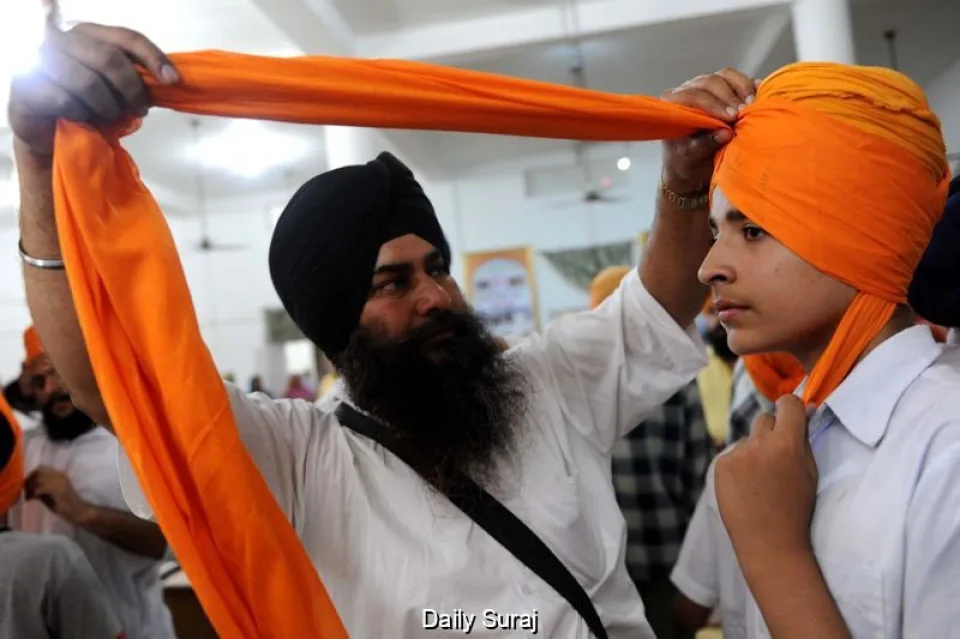
The newly elected government in Canada's Quebec province is preparing to prohibit students from wearing religious attire, including Sikh turbans and Muslim niqabs, in primary schools. The proposed move has drawn criticism from civil liberties organisations and Muslim groups, which have warned that the restrictions could undermine religious freedom and marginalise children from minority communities.
According to a report by Vion, the separatist Parti Québécois government has announced its intention to extend existing restrictions on religious symbols to primary school students. The issue was part of the party's electoral agenda, and its leaders have indicated that they remain committed to implementing the proposal.
Quebec Education Minister Joel Arseneau reaffirmed the government's position when asked whether the party would honour its election promise to prohibit primary school students from wearing religious symbols.
"There can be no compromise on this. We were elected to do this," the minister said, adding that the government would work towards implementing the measure.
The Parti Québécois came to power following the provincial elections held in October, with restrictions on religious attire in schools forming part of its broader agenda.
Quebec Continues to Expand Restrictions on Religious Symbols
The proposed measure builds on restrictions introduced earlier under the previous Coalition Avenir Québec (CAQ) government. In April this year, the government introduced additional limitations on religious activities at public universities, government-subsidised private institutions and childcare centres, according to earlier reports by The Gazette.
The restrictions also covered collective religious activities in public spaces, including streets and parks.
Quebec's policy of restricting visible religious symbols in public institutions dates back to 2019, when the CAQ government introduced legislation on secularism. Under the law, certain categories of public employees were prohibited from displaying visible religious symbols, including Sikh turbans and Muslim women's hijabs, while performing their official duties.
Since then, the scope of these restrictions has gradually expanded to include government school staff, publicly funded private schools and publicly funded childcare facilities.
Civil Liberties Groups Oppose the Proposed Ban
The proposed restrictions have faced criticism from civil liberties advocates.
Anaïs Bussières McNicoll, Quebec spokesperson and Director of Fundamental Freedoms at the Canadian Civil Liberties Association (CCLA), said the province had progressively widened restrictions on religious expression.
She noted that the restrictions initially targeted certain public-sector employees before being extended to government school staff, publicly funded private schools and government-operated or publicly funded daycare centres.
Describing the latest proposal as an unnecessary measure, McNicoll argued that the government was now targeting children rather than addressing an established problem.
She said the proposal would send a message of exclusion and rejection to primary school students across the province.
Muslim Organisations Warn of Impact on Religious Freedom
The National Council of Canadian Muslims (CNQM) has also expressed serious concerns about the government's announcement.
In a statement, the organisation said the proposal raised important questions about religious freedom, equal access to public education and the place of religious minorities in Quebec society.
The council also pointed out that school leaders had warned that such restrictions could damage relationships between schools and families. It argued that targeting children should not be considered an appropriate public policy objective.
CNQM CEO Stephen Brown criticised the proposed policy, saying it challenged children's right to practise their spirituality.
He warned that the measure could make children from religious minority communities feel excluded from society.
"Children will receive the message that they are not part of society and are second-class citizens," he said.
The proposal has therefore sparked a wider debate in Quebec over secularism, religious expression and the rights of children from minority communities.





Leave a Reply