
CJP Founder Abhijeet Dipke Says Protest Seeks CEC Gyanesh Kumar’s Removal, Not Regime Change
- National
- (Asia/Kolkata)
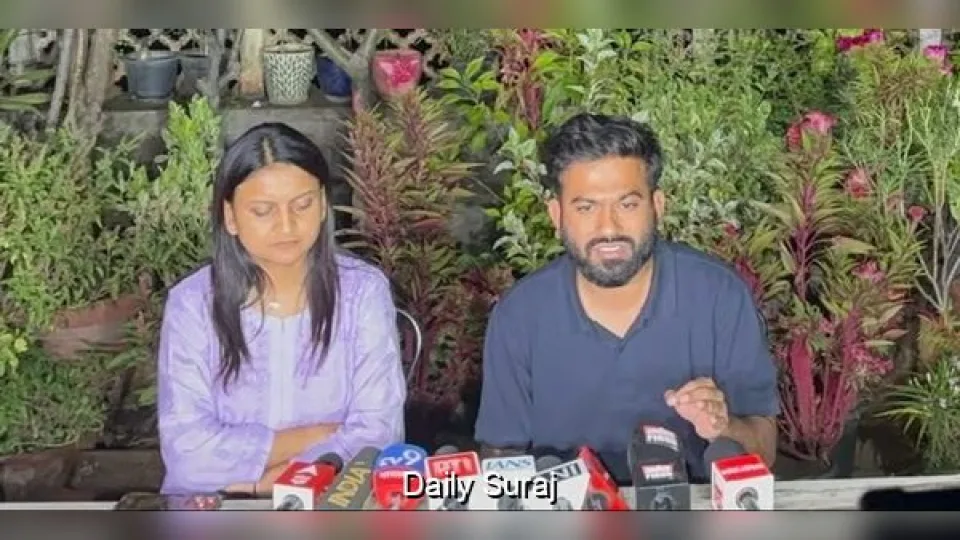
: Cockroach Janta Party (CJP) founder Abhijeet Dipke has clarified that his organisation’s protest against Chief Election Commissioner Gyanesh Kumar is aimed at securing his removal and ensuring accountability within the Election Commission, not bringing about a change of government.
Speaking at a late-night press conference in New Delhi, Dipke said the agitation was focused on what he described as irregularities in the electoral process and the need for an independent and impartial appointment to the post of Chief Election Commissioner (CEC).
“We are not saying we want to change the government… or we want to do something with it,” Dipke said. He alleged that Kumar was rigging elections, ignoring his fellow Election Commissioners and failing to heed the Supreme Court. He demanded that Kumar be removed and a new CEC appointed independently and without bias.
Dipke Responds to ‘Regime Change’ Remark
Dipke’s clarification came hours after senior advocate Prashant Bhushan described the agitation against Kumar as a “fight for regime change”. The remark prompted the BJP to step up its criticism of the Opposition and the protest movement.
The controversy has also drawn attention to earlier comments by CJP and All India Students’ Association (AISA) leader Neha Bora, who said she was inspired by Bangladesh’s Gen-Z movement, which preceded the fall of Sheikh Hasina’s government.
On Thursday, BJP spokesperson Pradeep Bhandari accused Rahul Gandhi and his “entire ecosystem” of seeking “Bangladesh-like anarchy” to bring about regime change and capture power at the Centre.
Referring to Bora’s remarks, Bhandari alleged that the agitation was not an exercise in democratic resistance but an attempt to create unrest and change the government.
Dipke, however, maintained that CJP’s demand was limited to accountability within the Election Commission.
“What are we asking for? We are just asking for accountability,” he said.
He alleged that Kumar had made changes to Form 6 without the Supreme Court’s approval and claimed that the other two Election Commissioners had disagreed with decisions taken. Dipke cited these allegations as grounds for demanding the CEC’s removal.
“Is asking for this much in a democracy now a sin or a crime?” he asked.
Dipke Questions Restrictions on Delhi Protest
Dipke also criticised the restrictions imposed ahead of CJP’s proposed ‘Lehra Do Tiranga’ programme at Connaught Place on Friday, October 16. He questioned the decision to close Central Park and the extensive security arrangements made in the area.
Referring to the October 10 protest, Dipke said authorities had restricted movement by shutting Metro stations and imposing other curbs. He questioned why Central Park was being closed after CJP announced plans to gather there with the national flag.
“Is waving the Tricolour now a crime in India?” he asked, accusing the government of being apprehensive about the demonstration and questioning the scale of the security deployment.
Delhi High Court Allows Demonstration to Proceed
The Delhi High Court on Thursday declined to stop the CJP demonstration scheduled for October 16 at Connaught Place. The court recorded the Delhi Police’s assurance that all lawful measures would be taken to regulate the protest and maintain public order.
Meanwhile, the New Delhi Municipal Council (NDMC) announced that Central Park would remain closed to the public on October 16 and 17.
The proposed demonstration has also prompted Delhi Police to warn participants against violating restrictions. The police said any protest must comply with the rules governing the national flag and the national anthem.
More than 6,000 police personnel, along with additional central forces, are expected to be deployed in the New Delhi area.
Political Disagreement Over the Protest’s Objectives
The contrasting descriptions of the agitation have opened a fresh political fault line. Bhushan’s reference to regime change and Bora’s remarks about Bangladesh have provided the BJP with grounds to portray the protests as an attempt to destabilise the elected government.
Dipke, meanwhile, has sought to distinguish CJP’s position by reiterating that its principal demand is the removal of the Chief Election Commissioner and accountability within the Election Commission.
Despite the political controversy and security restrictions, CJP is pressing ahead with its ‘Lehra Do Tiranga’ call for Friday’s demonstration in Delhi.


Leave a Reply