
Gold Prices Fall by ₹2,530, Silver Drops to ₹1.80 Lakh per Kg Ahead of Diwali
- Punjab
- (Asia/Kolkata)
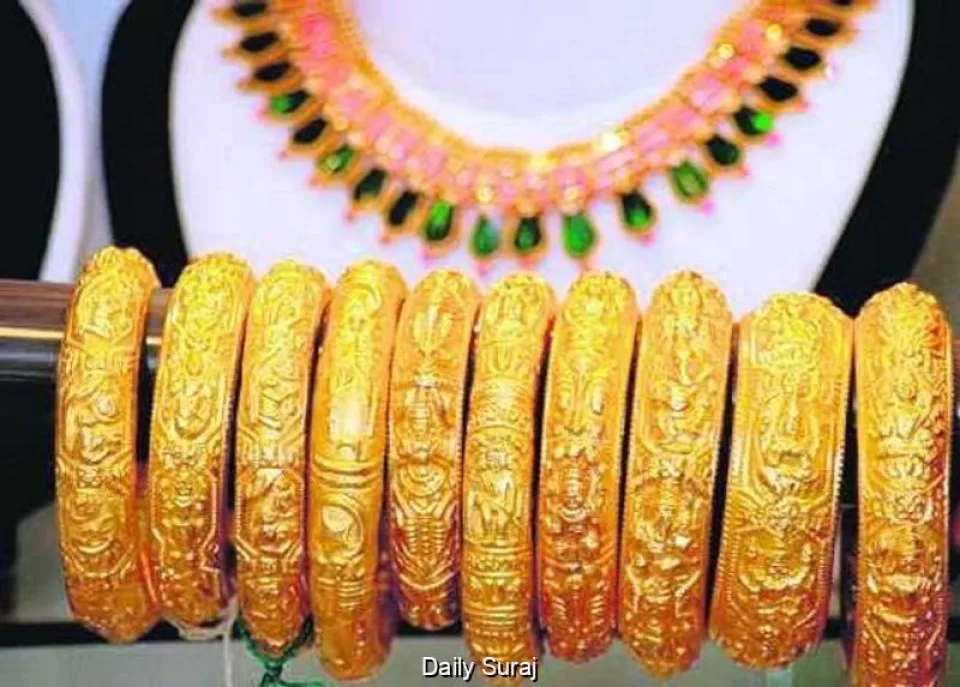
Gold and silver prices continued their downward trend ahead of Diwali, bringing some relief to buyers. According to the India Bullion and Jewellers Association (IBJA), the price of 24-carat gold declined by ₹2,530 per 10 grams to reach ₹1.38 lakh.
Silver prices also witnessed a decline, falling by ₹1,372 per kilogram to ₹1.80 lakh. On Friday, gold was trading at ₹1.40 lakh per 10 grams, while silver was priced at ₹1.81 lakh per kilogram.
Silver Becomes Cheaper by Nearly ₹40,000 in October
Gold and silver witnessed a significant correction throughout October 2026. During the month, gold prices declined by ₹8,084 per 10 grams, while silver became cheaper by ₹39,485 per kilogram.
On October 1, 2026, gold was priced at ₹1.48 lakh per 10 grams, while silver stood at ₹2.20 lakh per kilogram. This means silver prices dropped by nearly ₹40,000 in just one month.
US Interest Rates and Strong Dollar Behind Price Decline
The decline in gold and silver prices is being attributed to several international economic factors rather than a single development. Rising inflation in the United States, the US Federal Reserve's firm stance on interest rates, a stronger dollar and profit-booking by investors have increased pressure on precious metals.
Additionally, elevated crude oil prices in international markets have raised concerns about inflation and the possibility of higher interest rates, further affecting investor sentiment towards gold and silver.
Rising US Inflation Changes Market Sentiment
One of the major factors influencing gold prices is the increase in inflation in the United States. The annual inflation rate in the country rose to 3.7 per cent in September, compared with 3.4 per cent in August.
Higher energy and petrol prices contributed significantly to this increase. The development strengthened expectations that the US Federal Reserve could maintain interest rates at elevated levels or consider further increases.
When interest rates remain high, investors generally prefer interest-bearing instruments such as US government bonds. Since gold and silver do not generate interest, their attractiveness as investment options tends to decline in comparison.
This shift in investment preferences can reduce demand for precious metals and put downward pressure on their prices.
Strong Dollar and Profit-Booking Add to Pressure
Gold and silver are traded internationally in US dollars. When the dollar strengthens against other currencies, these metals become more expensive for buyers using other currencies, potentially reducing international demand.
Profit-booking has also contributed to the recent decline. Following the sharp rise in prices over the previous period, several investors began selling their gold and silver holdings to secure profits. This increased selling pressure has further affected market prices.
According to market experts, liquidity requirements and declines in other financial assets have also prompted investors to sell gold and similar holdings. As a result, even gold's traditional appeal as a safe-haven investment has faced pressure amid financial uncertainty.
Industrial Demand Affects Silver Prices
Silver has experienced a sharper decline than gold, partly because of its extensive industrial applications.
The metal is widely used in solar panels, electronic devices and several other industries. According to a Silver Institute report, industrial applications accounted for approximately three-fifths of total silver demand in 2025.
Solar panel manufacturers are also reducing the amount of silver used in individual panels to lower production costs. Expectations of weaker industrial demand have added to the pressure on silver prices.
Another important factor is that the silver market is smaller and more volatile than the gold market. Consequently, silver prices tend to experience sharper movements, both upward and downward.
What Is the Outlook for Gold and Silver Prices?
Market experts expect gold prices to remain volatile in the near term. Developments related to US inflation, interest rate decisions, movements in the dollar and international geopolitical tensions will play an important role in determining the direction of precious metal prices.
However, continued gold purchases by central banks and investment flows into funds could provide support to gold prices over the longer term.
For silver, industrial demand and developments in the renewable energy and electronics sectors will remain important factors influencing its price movement.





Leave a Reply