
Writer Gurbhajan Gill Remembers Revolutionary Baba Bujha Singh
- Punjab
- (Asia/Kolkata)
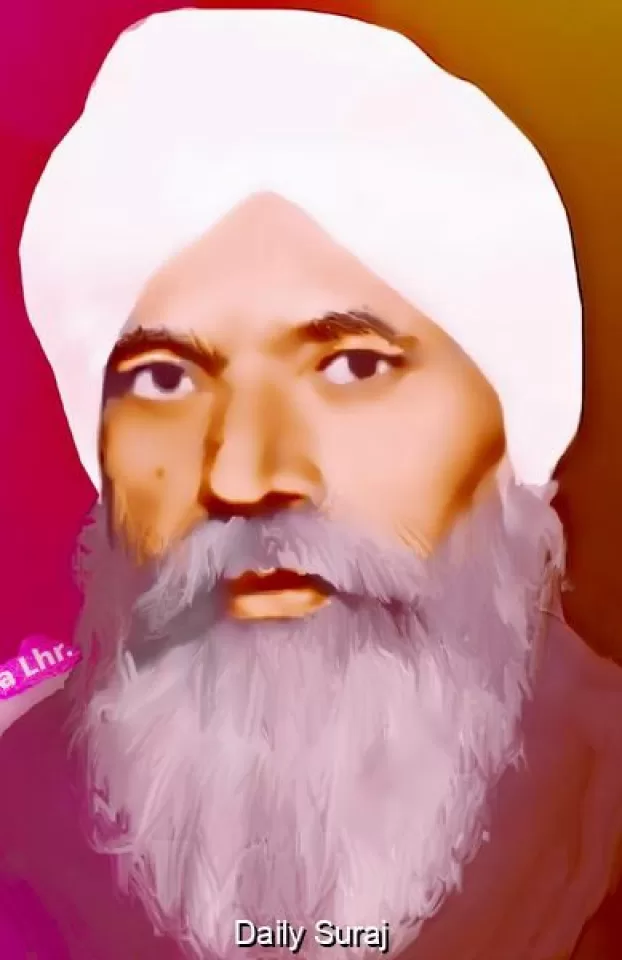
Renowned writer Gurbhajan Gill has paid tribute to revolutionary patriot Baba Bujha Singh, highlighting his life, struggle, and enduring legacy in political and literary spheres. Baba Bujha Singh was an active member of the second phase of the Ghadar Party movement in Argentina. He later returned to India via Moscow and joined the Communist Party. However, due to differences over party policies, he, along with Teja Singh Sutantar and other associates, formed the Lal Communist Party. Eventually, the members rejoined the Communist Party. Born in Chak Maidas village near Banga in Nawanshahr, Baba Bujha Singh earned recognition as a determined grassroots leader. In 1967, he became associated with the Naxalbari movement during its rise. His growing influence reportedly caused concern among authorities. According to available accounts, on the night of July 27–28, 1970, the elderly leader, then around 80–82 years old, was detained by police near Phillaur and subjected to severe torture. Further custodial abuse was allegedly carried out at Banga police station. Contemporary reports indicated that he was later killed in what was described as a staged police encounter near an isolated bridge on the Nawanshahr–Chandigarh road. Official records from that period state that Parkash Singh Badal was serving as the Chief Minister of Punjab at the time. Writer Ajmer Sidhu has documented Baba Bujha Singh’s life in the book “An Untold Story: Baba Bujha Singh from Ghadar to Naxalbari,” which has also been translated into English. In his memory, a building named “Baba Bujha Singh Bhawan” has been constructed in Mansa. His martyrdom has also inspired literary works. Noted poet Shiv Kumar Batalvi wrote the poem “Rukh Nu Fansi,” which was translated into English by Nirupama Dutt and published in The Indian Express. Additionally, poet Santokh Singh Dhir referenced his sacrifice in the poem “Inaam,” reflecting on the life and death of the revolutionary. Through such writings, Baba Bujha Singh’s struggle and sacrifice continue to resonate across generations, preserving his place in both history and literature.




Leave a Reply