
Supreme Court Raises Concern Over Illegal Sand Mining, Directs UP to Fill Forest Department Vacancies
- National
- (Asia/Kolkata)
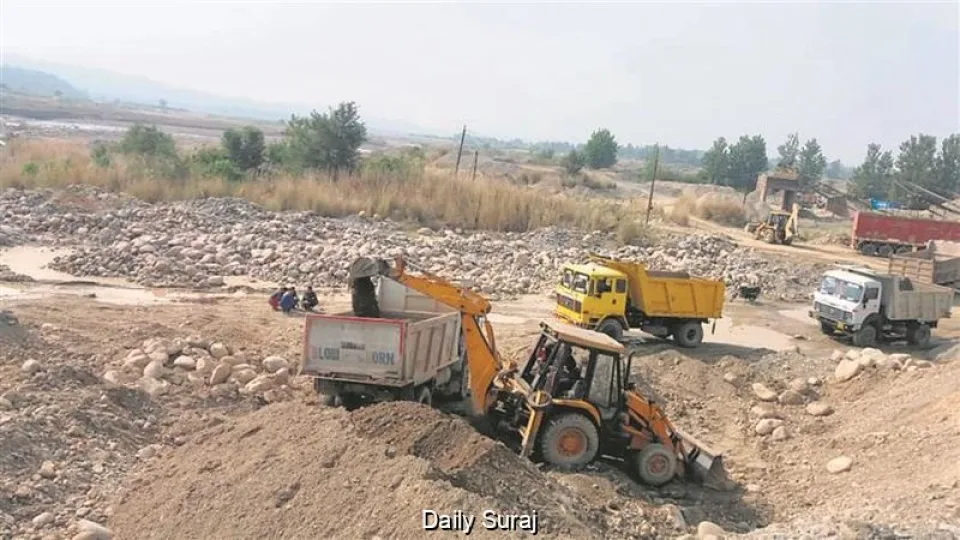
The Supreme Court has expressed concern over shortcomings in efforts by Madhya Pradesh, Rajasthan and Uttar Pradesh to prevent illegal sand mining in the National Chambal Sanctuary. A Central Empowered Committee (CEC), constituted by the Supreme Court, has highlighted several serious gaps in the measures reported by the three states, including staff shortages, incomplete monitoring systems, inconsistencies in enforcement data and irregularities in procedures for seizing vehicles.
In its report submitted to the Supreme Court, the committee has specifically directed the Uttar Pradesh government to immediately fill two vacant forest department posts at the National Chambal Wildlife Sanctuary in Agra. The positions of Deputy Conservator of Forests (DCF) and Assistant Conservator of Forests (ACF) have reportedly remained vacant for several months.
The committee noted that the additional charge of the DCF post has been assigned to the Divisional Forest Officer (DFO) of Agra. However, no officer has been given the additional responsibility of the vacant ACF position.
The CEC has also asked all three states to ensure that important and sensitive forest department positions are not left vacant for extended periods, particularly when effective monitoring and enforcement are essential.
Questions Raised Over Madhya Pradesh and Rajasthan
Madhya Pradesh informed the committee that 211 employees were currently working against 223 sanctioned forest department posts, leaving 12 positions vacant. These include nine Deputy Range Officers and two Range Officers.
The committee observed that the staffing requirements need to be reassessed in view of the extensive patrolling areas, sensitive river stretches and the need for round-the-clock surveillance.
Madhya Pradesh also reported installing 42 CCTV cameras at 18 locations, 30 body cameras, 12 dashboard cameras in six vehicles, an artificial intelligence (AI)-based monitoring system and four control rooms.
However, the state's wireless communication system is still at the tendering stage, while all 16 permanent checkposts have not yet been completed.
The state reported seizing 1,250 vehicles, including 682 in Morena, 165 in Sheopur and 403 in Bhind. However, the committee has sought complete and verified district-wise information regarding enforcement action, vehicle seizures and GPS-based monitoring.
In Rajasthan, the CEC expressed serious concern over reports that vehicles seized in connection with illegal sand mining and forest-related offences in Dholpur were released even though confiscation proceedings were still pending.
The committee has directed the state to submit vehicle-wise details and examine whether the prescribed legal procedures were followed before releasing the seized vehicles.
Inter-State Coordination and Data Discrepancies
The report also highlighted inadequate coordination among Madhya Pradesh, Rajasthan and Uttar Pradesh in tackling illegal sand mining.
The committee has urged the three states to establish a common system for sharing information until a joint dashboard becomes operational. The proposed reporting mechanism should cover offenders, vehicles, seizures, routes, criminal cases and penalties to improve coordination and enforcement.
The CEC has also identified significant discrepancies between the data provided by the Forest Department and the Mining Wing regarding allegations of illegal sand mining along the Ken River.
The committee has directed the concerned departments to clarify the differences in their figures and provide accurate information.
The report underlines the need for stronger enforcement, adequate staffing, reliable monitoring systems and better coordination among the three states to effectively control illegal sand mining in the National Chambal Sanctuary and other sensitive areas.





Leave a Reply